SCOR DS Framework
The Supply Chain Operations Reference Digital Standard (SCOR) model is at the core of every supply chain re-engineering process. It is the only comprehensive, universally accepted and open-access supply chain standard used by companies large and small. SCOR gives organizations the ability to assess and improve their company’s supply chain, leading directly to improved business performance.
The value of SCOR
Use SCOR to analyze, measure and improve your supply chain
By combining elements of business process engineering, leading practices, benchmarking, people skills and a variety of metrics into a succinct framework, SCOR makes it possible to pinpoint core process areas that need optimization.
When our clients use SCOR as an end-to-end process blueprint, they not only achieve a remarkable ROI, but other key indices improve as well. Typical results include:
- 2 to 6 times ROI in the first year
- Operating income improvement to 3% of sales
- Better return on assets for fixed-asset technology investments
- 30% faster digital transformation project implementations
- Reduction in information technology operating expenses
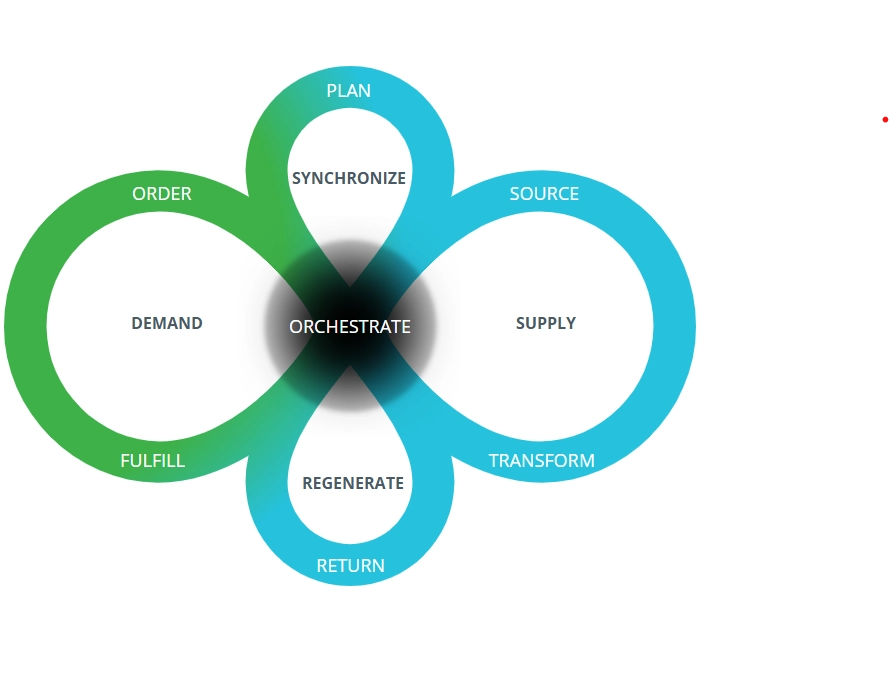
SCOR DS Processes
Understanding the core processes that drive supply chain excellence
Plan
Plan describes the activities associated with developing road maps to operate the supply chain. Planning is executed for the Order, Source, Transform, Fulfill and Return processes, including determining requirements; gathering information about available resources; balancing requirements and resources to determine planned capabilities and gaps in demand or resources; and identifying actions to close these gaps.
Source
Source describes the activities associated with procuring, ordering, scheduling the delivery, receipt, and transfer of products and services.
Transform
Transform describes the activities associated with the scheduling and creation of products, including production; assembly and disassembly; maintenance, repair and overhaul; and more.
Order
Order describes the activities associated with the customer purchase of products or services, including attributes such as locations, payment methods, pricing, fulfillment status and any other order data.
Fulfill
Fulfill describes the activities associated with executing customer orders or services, including scheduling order delivery, picking, packing, shipping, installing, commissioning and invoicing.
Return
Return describes the activities associated with the reverse flow of goods and services, as well as any service components from a customer through the network in order to diagnose condition, evaluate entitlement, disposition back into Transform or other circular activities.
Orchestrate
Orchestrate describes the activities associated with the development and enablement of supply chain strategies. This includes business rules and enterprise business planning; human resources; network design and technology; data analytics; contracts and agreements; regulations and compliance; risk mitigation; environment, social, and governance initiatives; circular supply chain activities; performance management; and more.